

Scientific rigor. Practical expertise. A corporate vision.
IHST was founded on the belief that occupational health must be integrated into business decisions without losing touch with the realities of the workplace. Two co-founders are driving this vision: to combine expertise in occupational health, an understanding of organizations, and the ability to implement solutions.
A multidisciplinary team
Experts dedicated to occupational health.
A Comprehensive Approach
Prevention, support, practical solutions, and long-term follow-up.
A lasting impact
For healthier and more inclusive work environments.
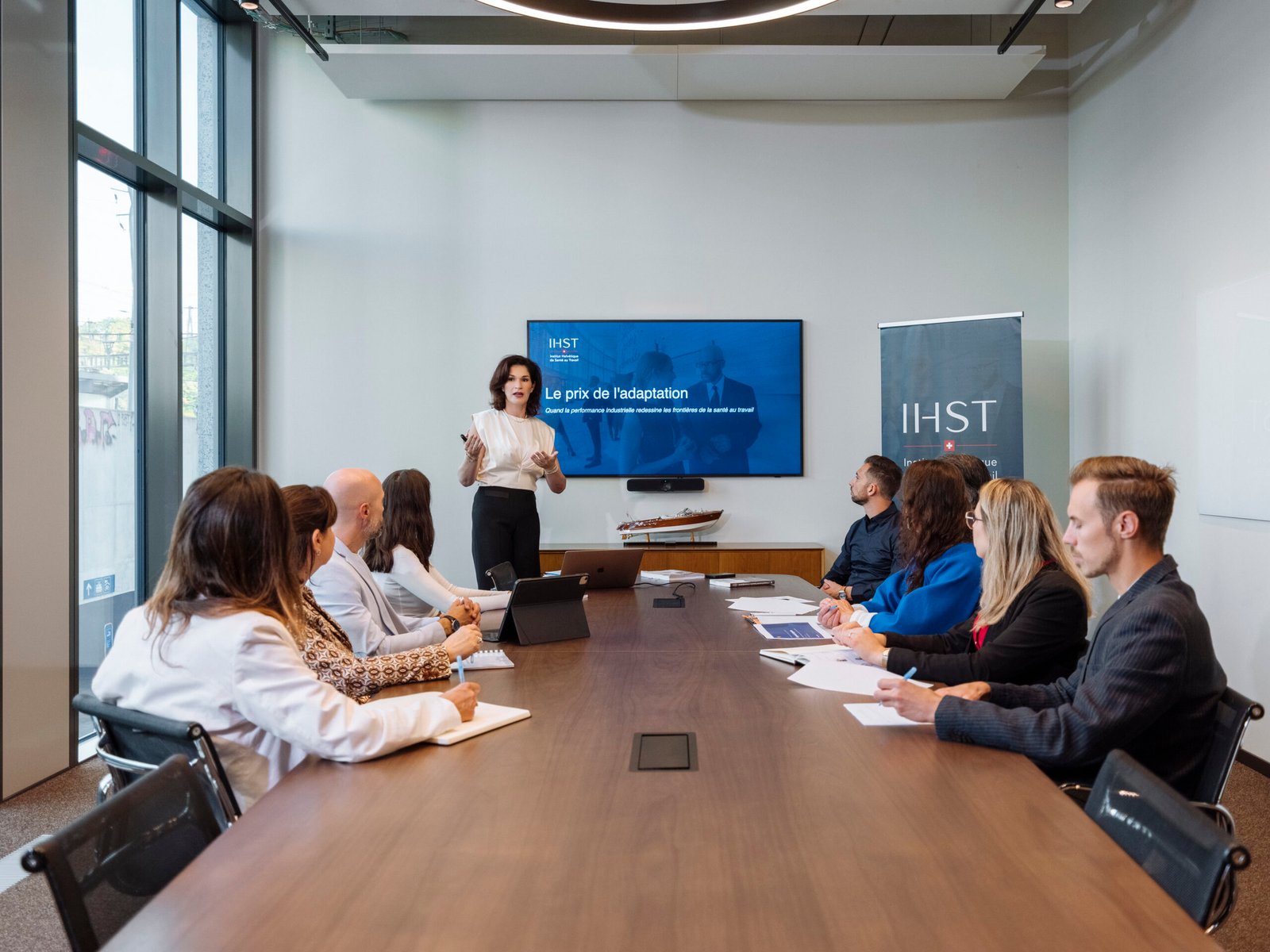
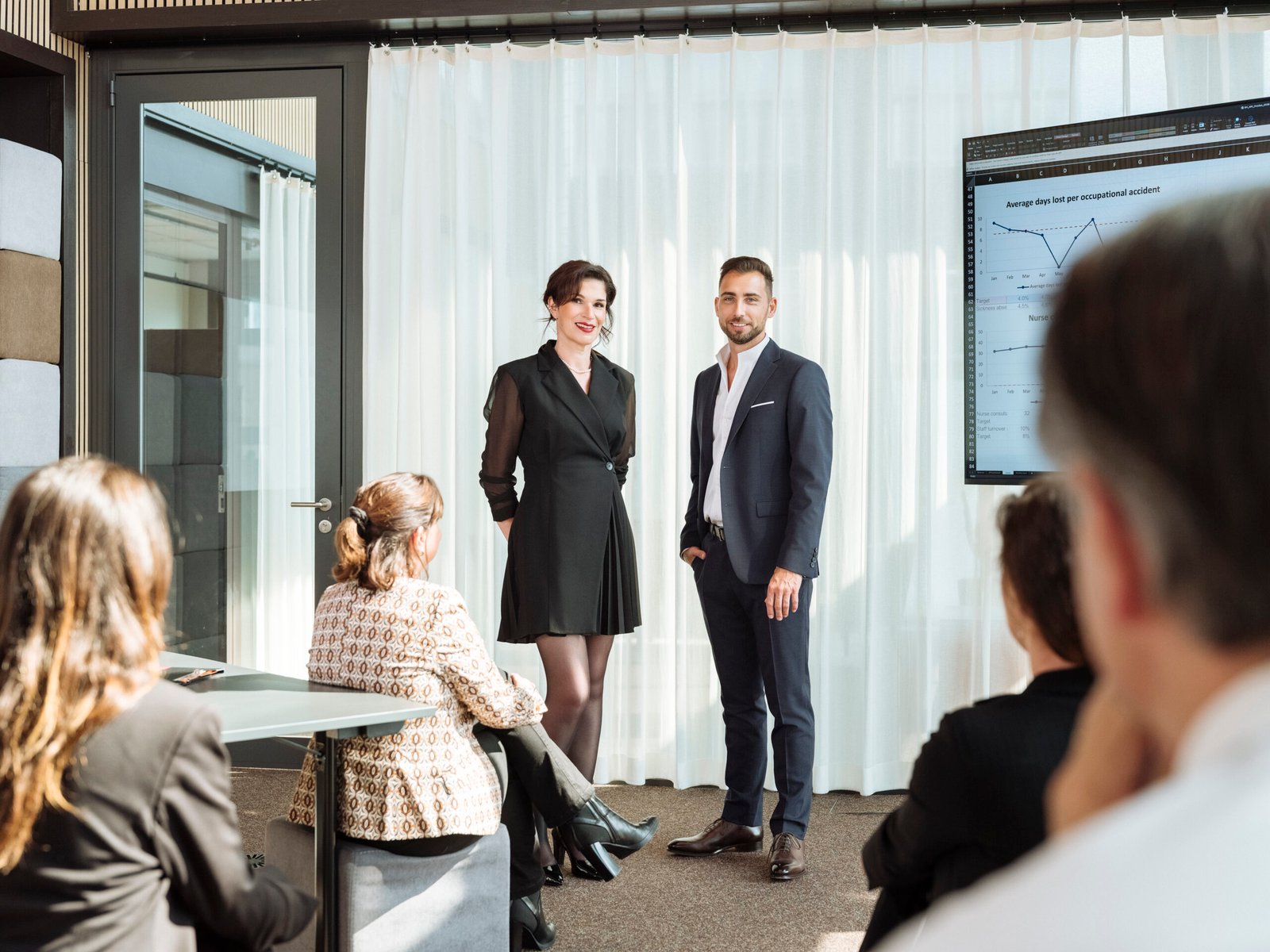
Two paths.
One standard.
The IHST was born out of the convergence of two complementary fields of expertise: occupational health, prevention, and the analysis of workplace situations; and management, entrepreneurship, and organizational development.
Together, its two co-founders share a common conviction: occupational health issues cannot be separated from the human, managerial, and strategic realities of a company. This complementarity forms the foundation of the Institute’s identity: an approach that is scientifically rigorous, pragmatic in its implementation, and attentive to the realities of each organization.
Haniya Eduin
Occupational Health, Prevention, and a Hands-On Approach
Haniya grew up mainly in Narbonne and Montpellier, and spent part of her childhood in the United States (Grand Forks) and South Africa (Cape Town). Having lived on three continents before reaching adulthood, she learned at a very early age how to navigate from one world to another. This has given her a keen understanding of different cultures and an immediate ease in interacting with people, no matter who they are.
His Career
These regions have shaped his vision of occupational health and provided him with a rich and varied range of hands-on experience.
It is through her work as a nurse that she discovers French-speaking Switzerland. Oncology, intensive care, emergency rooms: from Fribourg to Geneva, via the Bernese Jura, Neuchâtel, and Valais, she works as a nurse in departments where every decision counts. At each stage, she discovers a new canton, a new culture, and a new way of working.
Fribourg
The canton of Fribourg—home to the Gruyère region and the armaillis, where traditional skills are passed down from generation to generation—taught him the value of passing on knowledge: knowledge only lives on when it is shared.
Bernese Jura
The Bernese Jura, where precision workshops have been in operation for generations, has taught him the value of craftsmanship: preserving craftsmanship means preserving the individual.
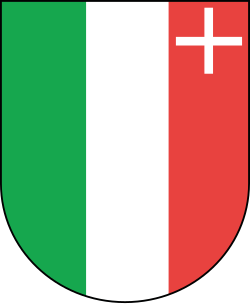
Neuchâtel
The canton of Neuchâtel, where the watchmaking traditions of La Chaux-de-Fonds and Le Locle coexist with science and innovation, and where time is measured to the thousandth of a second, instills in him a sense of precision: observe, measure, adjust, and then start over—until perfection is achieved.
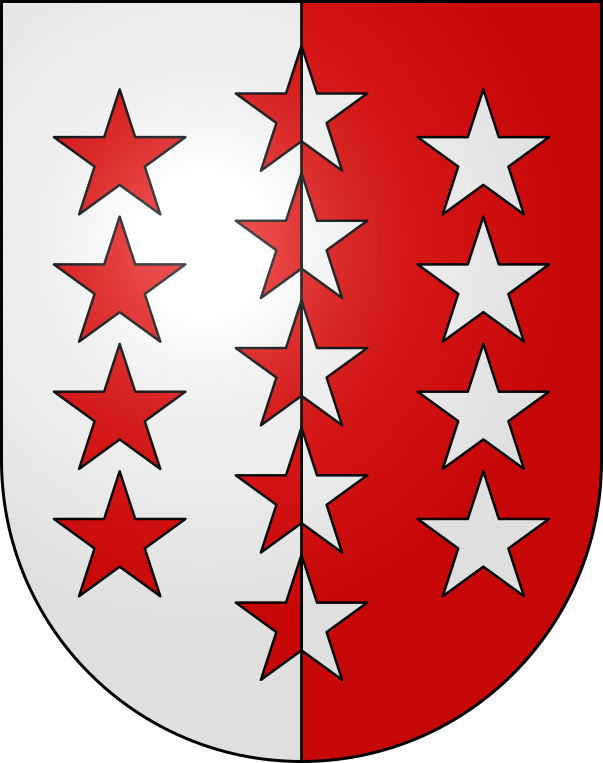
Valais
Valais holds a special place in its history. In this land of peaks and glaciers, she discovers men and women who live with the mountains, respect them, and understand what they demand. There, she encounters the spirit of rescue—those teams that set out without hesitation to help others—and she learns that courage alone is not enough: in the mountains, safety is prepared long before danger strikes. You read the terrain, assess the risks, gear up, train, and know exactly who does what on the day everything changes. What Valais teaches her is the very essence of occupational health: prevention rather than rescue, and being ready when rescue is needed.

Geneva
Geneva, at last, a global city. Few people know this: it was here, in 1950, that experts brought together by the International Labor Organization and the World Health Organization drafted the definition of occupational health that remains the global standard today: to promote and maintain the highest possible level of physical, mental, and social well-being among workers in all occupations. More than seventy-five years later, these words remain as relevant as ever, and they guide every one of his actions. What Geneva has bequeathed to him: to think on a global scale, to act at the level of a single workplace.
Real-world experience
Oncology taught her patience, active listening, and the importance of being present; intensive care and the emergency room taught her to remain calm when everything is moving at a frantic pace and to make quick, sound decisions. At patients’ bedsides, she made an observation that would shape everything that followed: many health trajectories are determined long before a patient reaches the hospital—and often at work.
From this journey, she has come away with one certainty: Switzerland draws its strength from its diversity. It is this commitment that gives her institute its name: Helvétique.
A multidisciplinary background
A nurse specializing in emergency care, she later shifted her focus to ergonomics and occupational health, earning a CAS in Work and Health from HES-SO. With a degree in psychology, she also studied political science, which informs her perspective on organizations. As a first aid instructor (in both physical and mental health), she is trained in maternity protection and psychosocial risks. She works in French, English, and Spanish, speaks Afrikaans, and has studied Latin. Since 2021, she has been volunteering with a Geneva-based organization that provides listening services and psychosocial support.
A Human-Centered Approach
She then worked in occupational health, first at an international organization and later in the medical department of an industrial group. She quickly rose through the ranks there: Company Nurse, then Lead Specialist HR Nurse, and finally Senior Expert HR, Medical Service. Long-term absences, returns to work, psychosocial risks, ergonomics, first aid: there, she came to appreciate just how much early and coordinated intervention can change the course of a situation, for both the individual and the organization.
At the height of her career, and grateful for the trust placed in her, she chose to leave her position to devote herself fully to what drives her: advancing occupational health, both in the field and in research.
The Founding of the Swiss Institute for Occupational Health
It was with this in mind that she founded the Swiss Institute for Occupational Health (IHST). Through the institute, she supports organizations in Switzerland and collaborates with international occupational health and safety organizations to advance research.
The IHST bridges the gap between healthcare, prevention, and work organization, so that every person can work in good health and every organization can rely on teams that are sustainably committed.
A Message from the Founder
“The best care is the kind you’ll never need”
“At the hospital, I’ve often seen situations arise too late that could have been prevented. Fatigue that no one had acknowledged. Pain that people had learned to keep to themselves. A situation that everyone could see, but didn’t know where to start.
In the workplace, I discovered the opposite: how much a well-chosen word, a tailored role, or a well-prepared return from a long-term absence can change things—when they come in time.
I think of those who have chosen occupational health: occupational physicians, ergonomists, psychologists, nurses, occupational health specialists, and safety experts. In the collective imagination, there’s medicine—and then there’s occupational medicine. As if treating were more valuable than preventing.
I’ve experienced both worlds: the emergency room, where we fight to save a life in the moment, and the workplace, where we fight to ensure it never collapses. I’ve seen the same courage, the same high standards, and the same impact in both. An emergency physician saves a life in a single night; an occupational physician protects hundreds of lives, year after year, without anyone knowing it. One has its heroes; the other, its quiet victories. Occupational health does not exist in the shadow of medicine— it is its horizon.
Finally, I’d like to address all those I’ve had the privilege of supporting, sometimes during times when nothing was easy: thank you. Your trust, your stories, and your courage have shaped every one of my convictions.
This trust compels me. It is from this trust that the IHST was born, along with a conviction forged in the emergency room: the best care is the care you’ll never need.”
Haniya Eduin
Alexis Delamaide
Strategy, Development, and Management
Alexis began his career in sports, where he learned that a team’s performance depends first and foremost on the individuals who make it up. From team sports, he retained a sense of teamwork; from trail running—which he still practices while immersed in nature—he gained endurance and a high standard for himself.
Trained in business management, he went on to create, develop, and lead international projects in demanding and ever-changing environments. It was there that he specialized in team management. An avid traveler, he has learned to work with people whose cultural norms differ greatly from his own, and this has given him a genuine ability to adapt.
He quickly grasps a situation and its implications—both human and strategic—and he listens intently, including to what is left unsaid. Rigorous in his approach, he connects just as naturally with a CEO as with a team on the ground: he sets a clear course, unites people without imposing his will, and helps those who work with him grow.
At IHST, he drives the Institute’s vision and development. He structures partnerships, organizes the resources needed for projects, and aligns client expectations with the Institute’s operational capabilities. His conviction is simple: a company can only grow sustainably if the people who bring it to life grow with it. Alongside the Institute’s co-founder, he ensures that IHST’s commitments are clear, achievable, and consistently followed through over time.
Two complementary roles, one shared goal: to make occupational health a priority for leadership, a focus on people, and a driver of tangible improvement.
A Message from the Co-Founder
"Just like in a long-distance race, what matters is going the distance—together."
“In sports, I learned very early on that you never win alone. In the companies I’ve founded and led, I’ve seen this proven every day: what keeps an organization going are the people—their commitment and their trust in those who guide them.
From one context to the next, the teams changed, and so did the challenges. One rule remained constant: you get a lot out of a team when you take the time to listen to it, when you give it a clear direction, and when you give it the space to grow.
It is this mindset that I bring to IHST: making occupational health a strategic priority, for the benefit of everyone and the entire organization. Just like in a long-distance race, what matters is going the distance—together.”
Alexis Delamaide
A dedicated team—
, coordinated expertise
IHST combines hands-on experience, complementary skills, and a scientific perspective to support each organization with the level of expertise best suited to its situation.

Practical resources
for improving workplace health
News, case studies, practical advice, and events related to workplace health.